If you eat at a Korean restaurant, you might notice something different.
Instead of individual plates for each person, dishes are placed in the center of the table — and everyone shares.
For many visitors, this can feel unfamiliar. Why don’t Koreans order separate meals like in some Western countries?
The answer lies in Korea’s deep-rooted communal culture.
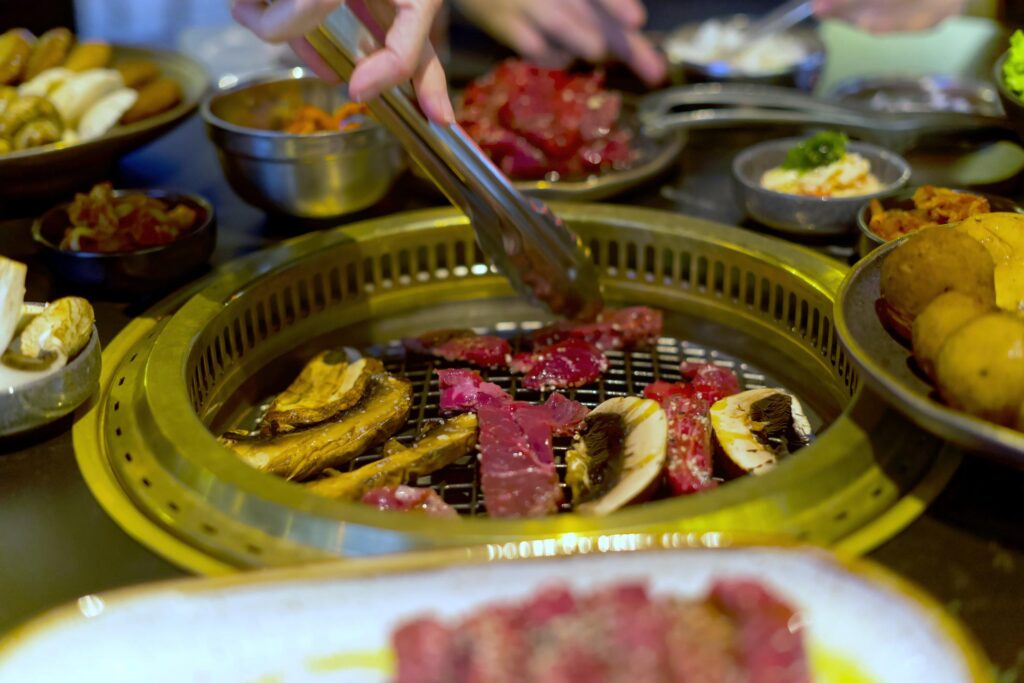
1. Communal Culture and Collectivism
Korean society traditionally emphasizes community over individualism.
Meals are seen as a shared experience rather than a personal one. Sharing food reinforces social bonds, equality, and togetherness.
When everyone eats from the same dishes, the meal becomes a collective activity.
2. Traditional Table Structure
In Korean cuisine, rice and soup are usually served individually.
However, main dishes — such as:
- Korean BBQ
- Stews (jjigae)
- Stir-fried dishes
- Seafood platters
are typically placed in the center for sharing.
This structure balances personal space (rice/soup) with communal dishes.
3. Emotional Connection Through Food
In Korea, eating together is strongly connected to relationship building.
Business meetings, family gatherings, and social events often revolve around shared meals.
The act of sharing food symbolizes trust and closeness.
4. Efficiency and Variety
Sharing also allows people to try multiple dishes in one meal.
Instead of ordering one item per person, groups can experience a wider range of flavors.
This is especially common in Korean barbecue restaurants and traditional dining settings.
5. Is It Hygienic?
Some travelers worry about hygiene when sharing dishes.
In Korea:
- Each person uses their own chopsticks
- Serving spoons are often provided
- Hot dishes are cooked at high temperatures
It is considered normal and safe within cultural norms.
What Should Tourists Know?
If you dine in Korea:
- Do not hesitate to share dishes
- Wait for elders to start eating first in formal settings
- Avoid sticking chopsticks upright in rice (it resembles a ritual practice)
- Offer to share rather than ordering completely separate dishes
Understanding these small details helps you blend in naturally.
FAQ: Sharing Food in Korea
Is it rude not to share food in Korea?
In casual situations, it is acceptable to order separately. However, in traditional or group settings, sharing is common and expected.
Do Koreans use serving utensils?
Yes, many restaurants provide serving spoons or tongs, especially for communal dishes.
Can I request my own plate?
Yes. Restaurants usually provide small personal plates for portioning shared food.
Is sharing common among strangers?
Not typically. Sharing is common within the same dining group, not between different tables.
Why do Koreans cook meat together at the table?
Korean BBQ emphasizes interactive dining. Cooking together strengthens social connection.
Final Thoughts
Sharing food in Korea is more than a practical dining habit. It reflects deeper cultural values of community, togetherness, and relationship-building.
For visitors, understanding this tradition transforms a simple meal into a cultural experience.
If you truly want to experience Korean culture, don’t just eat — share.