Many travelers visiting South Korea notice something surprising while walking through cities like Seoul or Busan.
The streets look remarkably clean.
Even in busy areas filled with cafés, restaurants, and street food vendors, there is often very little visible trash.
This raises a common question: why are Korean cities so clean?
The answer involves a combination of culture, social norms, and waste management systems.
1. Strong Social Norms About Public Behavior
One of the biggest reasons Korean cities remain clean is social expectation.
From a young age, people in Korea are taught not to litter and to respect shared public spaces.
Throwing trash on the ground is generally seen as socially unacceptable.
Because these expectations are widely shared, most people follow them without needing strict enforcement.
2. Responsibility for Personal Trash
Visitors may notice something unusual in Korea: there are relatively few public trash cans.
This is because many people carry their trash with them until they find a place to dispose of it properly, such as:
- Convenience stores
- Cafés
- Home recycling systems
This habit encourages individuals to take responsibility for their own waste.
3. A Strict Waste Sorting System
Korea has one of the most structured recycling systems in the world.
Waste is typically separated into categories such as:
- General waste
- Food waste
- Plastic
- Paper
- Glass
In residential areas, people must sort trash carefully before disposal. This system promotes awareness about waste and recycling.
4. Efficient City Maintenance
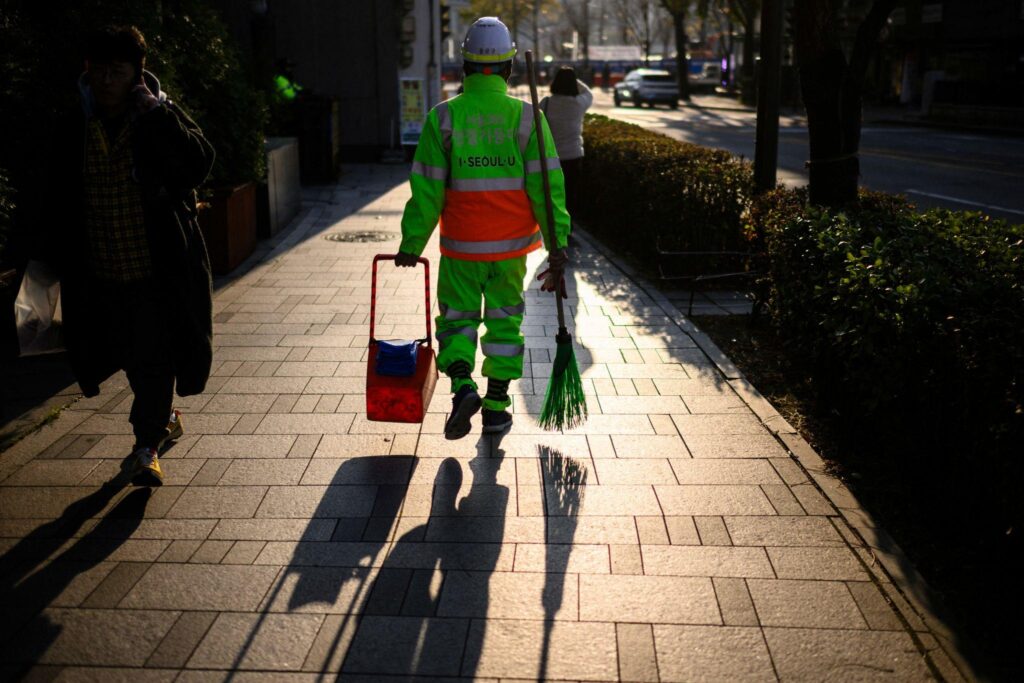
Local governments invest heavily in street cleaning and maintenance.
In many cities, workers regularly clean sidewalks, empty recycling bins, and maintain public spaces early in the morning.
As a result, streets remain clean even in busy districts.
5. Cultural Pride in Public Spaces
Clean streets are often viewed as a reflection of national pride.
Keeping neighborhoods tidy is seen as a sign of respect for the community.
This collective mindset contributes to the overall cleanliness visitors often notice.
Are There Really No Trash Cans in Korea?
There are trash cans, but they are less common than in many Western cities.
They are usually found in places like:
- Subway stations
- Shopping malls
- Convenience stores
- Parks
Because public bins are limited, many locals simply hold onto their trash until they reach a suitable disposal point.
FAQ: Clean Streets in Korea
Why are there so few trash cans in Korea?
After security concerns in the past, many public trash cans were removed. This also encouraged people to take responsibility for their own waste.
Is littering illegal in Korea?
Yes. Littering can result in fines in many cities.
Do people really carry their trash with them?
Yes. It is very common for people to keep trash in their bag until they find a place to throw it away.
Is recycling important in Korea?
Very much so. Recycling and waste separation are taken seriously and are part of everyday life.
Are all Korean cities clean?
Major cities such as Seoul, Busan, and Incheon are generally very clean compared to many large global cities.
Final Thoughts
The cleanliness of Korean cities is not the result of a single policy.
Instead, it comes from a combination of cultural habits, efficient waste management systems, and strong social expectations.
For many travelers, this cleanliness becomes one of the most noticeable and impressive aspects of visiting Korea.