Dining in Korea can feel slightly different from what many travelers are used to. From ordering systems and side dishes to payment methods and reservation apps, there are small cultural differences that may surprise first-time visitors.
This 2026 guide explains how Korean restaurants work and what you should expect when eating out in Korea.
1. Side Dishes Are Served Automatically
In many Korean restaurants, small side dishes are served before you even place your order.
These may include:
- Kimchi
- Pickled vegetables
- Seasoned greens
- Dipping sauces
These side dishes are typically included at no extra charge. In many places, refills are also free.
2. How to Order Food
Ordering systems vary depending on the restaurant.
Common methods include:
- Calling staff and ordering directly
- Using a tablet installed at the table
- Ordering through a QR code menu
Raising your hand or saying “Excuse me” to get staff attention is completely normal and not considered rude.
Many restaurants also have a service call button installed at each table. Pressing the button is often the most efficient way to request assistance.
3. Water and Utensils May Be Self-Service
In some restaurants, water, cups, utensils, and sometimes additional side dishes are self-service.
There is often a designated “self corner” near a wall or entrance. While this may feel unfamiliar, it is common practice in Korea.
4. Payment Is Made at the Counter
Unlike in some countries, restaurant staff usually do not bring the bill to your table.
After finishing your meal, you typically walk to the counter near the entrance to pay.
Credit card payment is extremely common in Korea, and cash is rarely required.
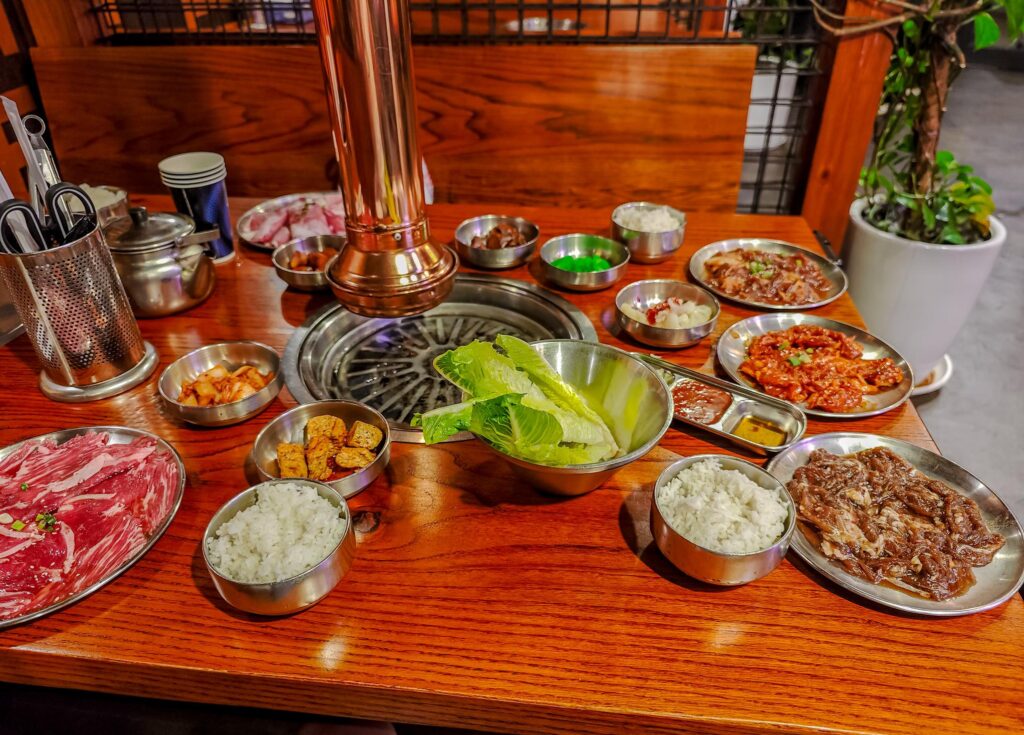
5. Korean BBQ Is Often Cooked at the Table
At Korean barbecue restaurants, especially those serving pork belly or beef, it is common to cook the meat yourself at a grill built into the table.
In some higher-end restaurants, staff may assist with grilling, but in many places customers cook their own food.
Cooking a few pieces at a time is more common than placing everything on the grill at once.
6. Sharing Dishes Is Common
In Korea, it is normal to order several dishes and share them among the table rather than ordering separate individual meals.
Stews, hot pots, and barbecue dishes are typically shared.
If you are dining alone, it is helpful to check whether the restaurant offers single-portion options.
7. Popular Restaurants Often Require Reservations or Waiting
Highly popular restaurants in Korea can have long waiting times, especially on weekends and during dinner hours. Waiting over an hour is not unusual.
Many restaurants now use digital reservation or remote waiting systems.
Useful apps include:
- Naver Reservation
- Catchtable
- 테이블링
Naver Reservation allows you to book directly after searching for a restaurant. Catchtable is particularly strong for high-demand restaurants. Tableling offers remote queueing, allowing you to join a waiting list without physically standing in line.
Some services may require a Korean phone number for verification, which can limit access for short-term tourists.
8. Many Restaurants Close Earlier Than Expected
While some restaurants operate 24 hours, many close between 9 PM and 10 PM.
Some establishments also have break times in the afternoon. Checking opening hours in advance is recommended.
9. Tipping Is Not Required
Tipping is not part of Korean dining culture.
Service charges are usually included in menu prices, and leaving extra money may create confusion.
Final Thoughts
Korean restaurant culture is efficient and fast-paced. While the system may feel unfamiliar at first, it becomes easy to navigate after one or two meals.
Understanding service call buttons, counter payments, shared dishes, and reservation systems will help you dine comfortably.
Korean cuisine is diverse and high quality, and experiencing it the local way is one of the highlights of visiting Korea.