If you visit a Korean restaurant for the first time, you might be surprised before your main dish even arrives.
Small plates of kimchi, vegetables, pickles, or salad suddenly fill the table — and you didn’t order them.
Even more surprising? They are usually free, and you can often ask for refills.
So why does this happen in Korea?
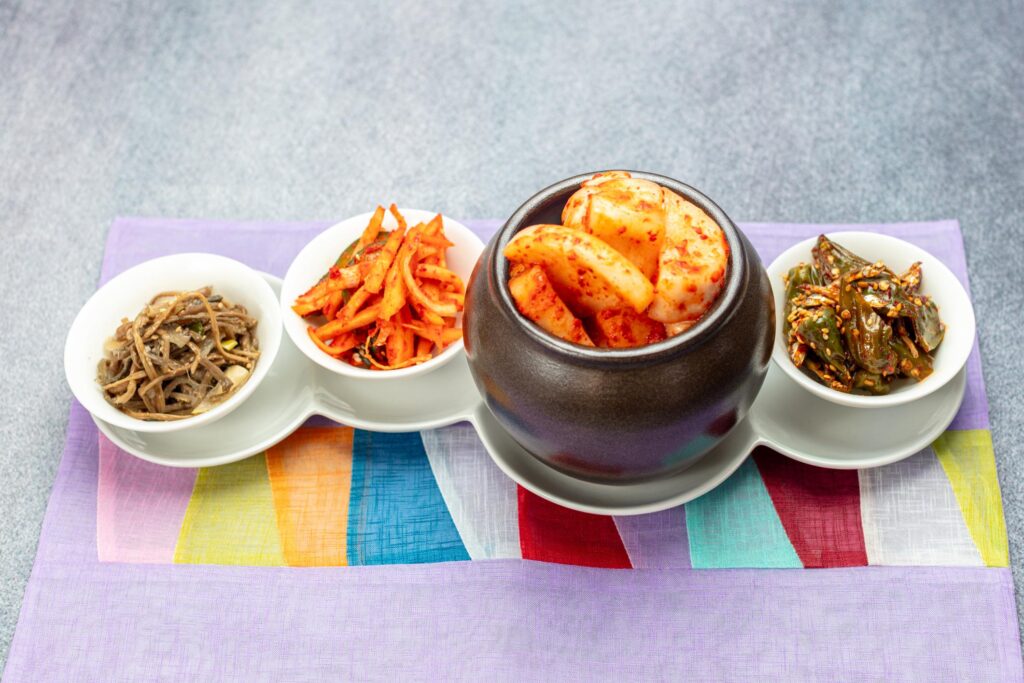
What Is Banchan?
Banchan refers to small side dishes served alongside rice in Korean cuisine. Unlike Western meals that focus on a single main dish, Korean meals are built around rice with multiple complementary dishes.
These side dishes can include:
- Kimchi
- Seasoned vegetables (namul)
- Pickled radish
- Tofu dishes
- Small portions of fish or stir-fried items
Banchan is not considered an optional extra — it is part of the traditional meal structure.
Why Are Side Dishes Free in Korea?
There are several cultural and practical reasons.
1. Traditional Dining Culture
Historically, Korean meals were served as a full table setting with multiple dishes shared together. Offering variety symbolized hospitality and generosity.
Modern restaurants continue this tradition.
2. Rice-Centered Meal Structure
Because rice is central to Korean cuisine, side dishes are essential to complete the meal. Charging separately for each item would fundamentally change how the meal is structured.
3. Competitive Restaurant Industry
Korea has a highly competitive dining market. Providing good and generous side dishes increases customer satisfaction and encourages repeat visits.
In many cases, restaurants use banchan quality as a way to differentiate themselves.
Are Refills Really Unlimited?
In most casual Korean restaurants, yes — refills are free.
However:
- Some barbecue restaurants may limit certain premium items
- Tourist-heavy areas may have different policies
- Wasting food is strongly discouraged
If you want more, it is completely normal to politely ask.
Is It Required by Law?
No. There is no legal requirement in Korea that forces restaurants to provide free side dishes.
It is a long-standing cultural practice, not a government regulation.
This means some specialty restaurants or international restaurants in Korea may not offer traditional banchan.
Why Is This Culture Special?
Korean dining emphasizes sharing and communal eating. Banchan reflects this philosophy.
Instead of focusing on a single plated dish, the meal becomes a collective experience where flavors are mixed and shared across the table.
For many travelers, this is one of the most memorable aspects of eating in Korea.
FAQ: Korean Restaurant Side Dishes
Are side dishes always free in Korea?
In most traditional Korean restaurants, yes. However, policies may vary in tourist areas or specialty restaurants.
Can I ask for more side dishes?
Yes. It is completely normal to request refills. Simply ask politely.
Do I need to finish all the side dishes?
You are not required to finish everything, but wasting large amounts of food is considered impolite.
Why do Korean restaurants serve so many small dishes?
It reflects traditional Korean dining culture, where meals are balanced and shared rather than centered around a single main dish.
Is this common in other countries?
Some countries have similar practices, but Korea is particularly well known for its generous and refillable side dish culture.
Final Thoughts
Free side dishes in Korean restaurants are not a marketing trick — they are a reflection of deep-rooted cultural traditions.
Understanding banchan helps travelers appreciate Korean dining beyond just the main dish. It turns a simple meal into a cultural experience.
If you are planning to eat in Korea, expect your table to fill up quickly — and enjoy the variety.