Street food is one of the most exciting parts of traveling in South Korea.
You can find it near subway stations, busy shopping streets, traditional markets, and late-night tent bars. Korean street food is fast, affordable, and deeply connected to everyday culture.
If you are visiting Korea for the first time, here is what you should know.
Where Can You Find Korean Street Food?
Street food is commonly found in:
- Night markets
- Traditional markets
- Popular shopping districts
- University areas
- Late-night tent bars
Traditional markets are especially popular among tourists because they offer both local atmosphere and a wide variety of foods in one place.
A well-known example is Gwangjang Market, which is famous for its lively food alleys. Visitors can try dishes like mung bean pancakes, mini gimbap rolls, and raw beef in a single location.
Traditional markets — especially Gwangjang Market — deserve a more detailed guide, and this will be covered in a separate post.
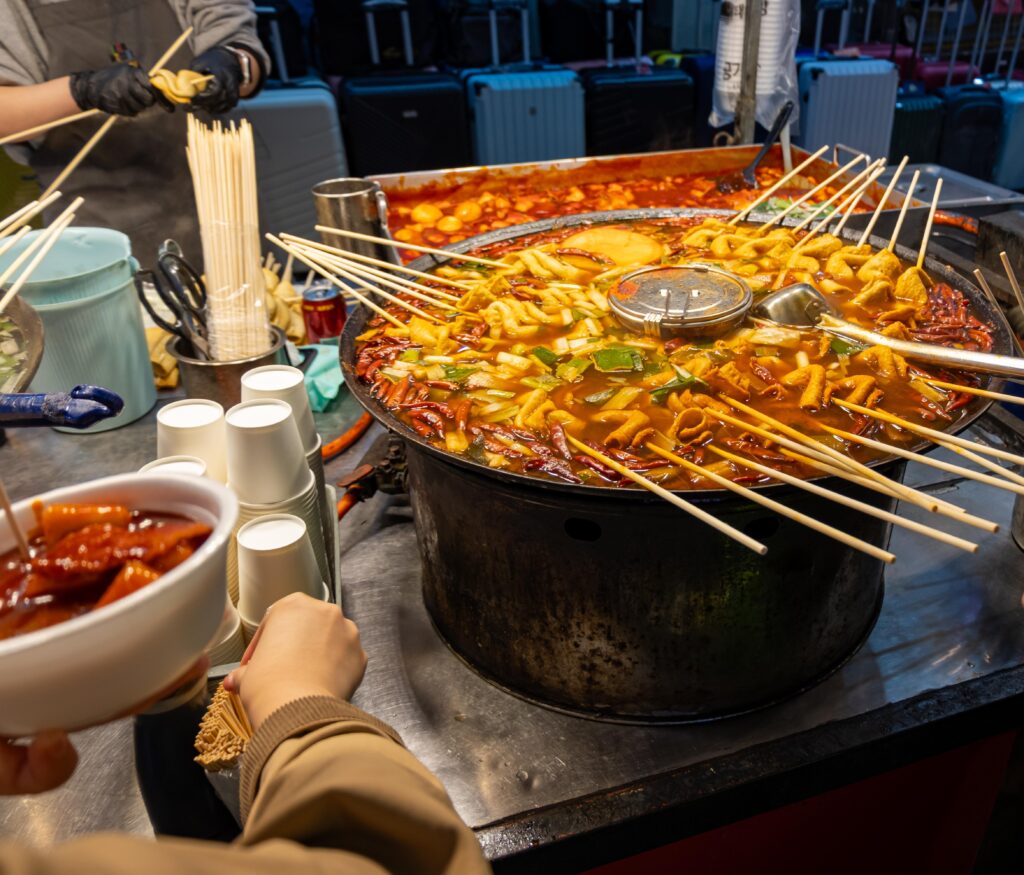
1. Tteokbokki
Tteokbokki is one of the most recognizable Korean street foods.
Chewy rice cakes are simmered in a red chili sauce. Traditional versions can be quite spicy, but newer variations include cream-based or black bean versions.
If you are sensitive to spice, it is worth asking whether a milder version is available.
2. Hotteok
Hotteok is a sweet street snack.
It is a filled pancake stuffed with brown sugar, cinnamon, and nuts. The outside is crispy, while the inside becomes warm and syrupy.
It is especially popular during the winter months.
3. Eomuk (Fish Cake Skewers)
Fish cake skewers are served in a light broth from large metal pots at street carts.
The broth is often free to sip, and the snack is inexpensive and comforting — especially on cold days.
4. Korean corn dog
Korean-style corn dogs have gained international popularity.
They are coated in crispy batter, sometimes rolled in sugar or diced potatoes before frying. Many versions are filled with mozzarella cheese, sausage, or both.
The stretchy cheese effect makes them visually distinctive.
5. Gimbap
Gimbap consists of rice and various fillings rolled in seaweed and sliced into bite-sized pieces.
It is portable, convenient, and commonly found in markets and snack shops.
6. Pojangmacha (Tent Bars)
Pojangmacha refers to temporary tent-style street bars that usually operate in the evening.
They serve simple dishes along with alcoholic drinks. Popular items include tteokbokki, fish cakes, pancakes, and skewered foods.
The atmosphere is casual and local, offering a different experience compared to regular restaurants.
How to Order Street Food
Ordering is straightforward:
- Point to the item you want
- Say the quantity
- Pay immediately
Cash is widely accepted, but many vendors now accept card or mobile payments.
Even if English is limited, pointing and simple gestures are usually enough.
Is Street Food Safe?
Korean street food is generally safe and freshly prepared.
- Food turnover is fast
- Cooking is done in front of customers
- Ingredients are visible
Choosing stalls with many customers is usually a good strategy.
Final Thoughts
Korean street food is more than just a quick snack — it is part of daily life and travel culture.
Visiting a traditional market, walking through a busy shopping street, or sitting at a tent bar while trying a few classic dishes can become one of the most memorable parts of your trip.